The information provided is of general nature only and does not take into account your personal objectives, financial situations or needs. Before acting on any information provided, you should consider whether the information is suitable for you and your personal circumstances and if necessary, seek appropriate professional advice. All opinions, conclusions, forecasts or recommendations are reasonably held at the time of compilation but are subject to change without notice. Past performance is not an indication of future performance. Go Markets Pty Ltd, ABN 85 081 864 039, AFSL 254963 is a CFD issuer, and trading carries significant risks and is not suitable for everyone. You do not own or have any interest in the rights to the underlying assets. You should consider the appropriateness by reviewing our TMD, FSG, PDS and other CFD legal documents to ensure you understand the risks before you invest in CFDs. These documents are available here.
Any references to Australian or international shares, sectors, indices, ETFs, crypto-related stocks or other instruments are provided for market commentary and watchlist purposes only and do not constitute a recommendation, offer or solicitation to buy, sell or hold any financial product or adopt any investment strategy. International markets may involve additional risks, including currency fluctuations, regulatory differences, market structure differences, reduced liquidity and higher volatility. Company-specific, sector-specific and macroeconomic risks may also affect performance.
Commentary on geopolitical developments, economic data, central bank decisions, earnings, policy changes and other global or financial market events is based on information available at the time of publication and may change without notice. Such events can lead to sudden market moves, price gaps, reduced liquidity, wider spreads and increased volatility, particularly in leveraged products such as CFDs. Forward-looking statements, expectations and scenario analysis are inherently uncertain and should not be relied on as guarantees of future market behaviour or outcomes.
Indian Rupee hits fresh seven-month high against US Dollar
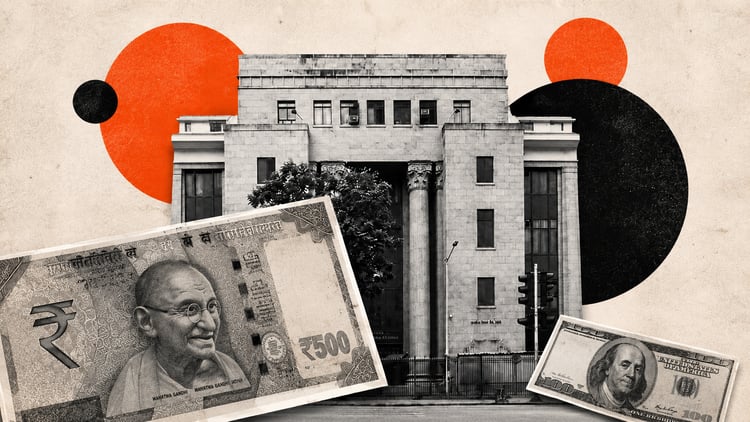
- The Indian Rupee posts a fresh seven-month high against the US Dollar, with the USD/INR pair sliding to near 93.00.
- Indian stock market continues to attract foreign money on the back of lower oil prices and global AI unwinding.
- The US Dollar Index extends its rally amid a hawkish Fed narrative.
The Indian Rupee (INR) extends its upside run against the US Dollar (USD) on Friday, strengthened by the continuous inflow of foreign funds amid global Artificial Intelligence (AI) unwinding and lower oil prices.
In the opening trade, the USD/INR pair posts a fresh seven-month low at 93.00.
On Thursday, Foreign Institutional Investors (FIIs) remain net buyers in the Indian stock market again and raised their stake in equities worth Rs. 7,411.41 crore. So far in November, FIIs has made investments worth Rs. 1,01,640.97 crore.
What has improved India’s appeal in recent weeks?
According to The Economic Times (ET), India has been described as an “anti-AI” trade because it was left out of much of the global AI rally and has limited direct exposure to the AI supply chain. Any unwinding of crowded AI-linked positions could therefore encourage investors to rotate into other emerging markets, including India and Brazil.
Analysts at DBS said in a note that “regional equity plays that have been relatively less exposed to the AI-play this year appear to be benefiting in the initial phase of re-allocation”.
Meanwhile, lower oil prices due to rising supply of energy products from the Middle East have also increased the appeal of India.
In the opening trade, the MCX Crude Oil contract expiring on December 18 is close to its over 11-week low of Rs. 7,619 posted on Wednesday.
Strategists at Danske Bank highlight that the recent sell-off in crude has been substantial, with “oil prices… down around 20% this month,” as the market responds to “recovering supply from the Middle East” and growing “expectations that US President Donald Trump will avoid renewed full-scale hostilities with Iran.”
Investors shrug off rally in US Dollar
The continuous rally in the Indian Rupee against the US Dollar despite the US Dollar Index (DXY) hitting fresh highs every trading day in over a week reflects sheer strength in the Indian currency.
As of writing, the USD Index is marginally lower to near 103.78 from its fresh 19-month high of around 104.00 posted the previous day.
Analysts at MUFG/BTMU note that “almost all Fed officials have judged that additional rate hikes would likely be appropriate in the months ahead to bring inflation back to the 2% target.” They add that “markets continue to fully price in a 25bps hike in December, three 25bps hikes by June next year, leaving elevated US rates and a resilient Dollar.
USD/INR Technical Analysis

In the daily chart, USD/INR trades at 93.00, extending its decline below the short-term trend as the 20-day Exponential Moving Average (EMA) at 94.11 now caps the upside. The pair retains a bearish near-term bias while it holds under this dynamic resistance, although the Relative Strength Index (RSI) at 24.83 shows oversold conditions that hint at the risk of a corrective bounce rather than a clean trend acceleration lower.
On the topside, initial resistance is located at the 20-day EMA around 94.11, and a daily close above this barrier would be needed to ease immediate downside pressure and open room for a broader recovery. On the downside, the pair could extend its decline towards 92.44.
(The technical analysis of this story was written with the help of an AI tool. Know more.)
Indian Rupee FAQs
The Indian Rupee (INR) is one of the most sensitive currencies to external factors. The price of Crude Oil (the country is highly dependent on imported Oil), the value of the US Dollar – most trade is conducted in USD – and the level of foreign investment, are all influential. Direct intervention by the Reserve Bank of India (RBI) in FX markets to keep the exchange rate stable, as well as the level of interest rates set by the RBI, are further major influencing factors on the Rupee.
The Reserve Bank of India (RBI) actively intervenes in forex markets to maintain a stable exchange rate, to help facilitate trade. In addition, the RBI tries to maintain the inflation rate at its 4% target by adjusting interest rates. Higher interest rates usually strengthen the Rupee. This is due to the role of the ‘carry trade’ in which investors borrow in countries with lower interest rates so as to place their money in countries’ offering relatively higher interest rates and profit from the difference.
Macroeconomic factors that influence the value of the Rupee include inflation, interest rates, the economic growth rate (GDP), the balance of trade, and inflows from foreign investment. A higher growth rate can lead to more overseas investment, pushing up demand for the Rupee. A less negative balance of trade will eventually lead to a stronger Rupee. Higher interest rates, especially real rates (interest rates less inflation) are also positive for the Rupee. A risk-on environment can lead to greater inflows of Foreign Direct and Indirect Investment (FDI and FII), which also benefit the Rupee.
Higher inflation, particularly, if it is comparatively higher than India’s peers, is generally negative for the currency as it reflects devaluation through oversupply. Inflation also increases the cost of exports, leading to more Rupees being sold to purchase foreign imports, which is Rupee-negative. At the same time, higher inflation usually leads to the Reserve Bank of India (RBI) raising interest rates and this can be positive for the Rupee, due to increased demand from international investors. The opposite effect is true of lower inflation.
Related Articles