热门话题
5月7日公布的美国4月非农就业人口仅增加26.6万,大幅不及预期的99.8万。4月份失业率上升到6.1%,失业人数980万人。短期失业人数大幅增加,失业不足5周的人数从23.7万人增加到240万人。增加了10倍。远程办公的就业人员比例下降至18.7%,低于此前的21%,意味着疫情后期的线下恢复情况还是不错的。行业方面,休闲业,酒店业,服务业,教育行业,赌博娱乐行业,就业人数显著增长。而线上行业,食品饮料行业,快递业就业人数下降,二者基本抵消了。失业率和通胀的问题,都没有办法短期内同时得到有效解决。政府唯一能做的,就是先解决谁,后解决谁。举个例子:

商品价格快速上涨,汽车行业是下一个被影响的重要行业。由于供不应求的需求无法跟上刺激驱动的需求,汽车制造商的许多重要成分,例如铜,钢和铝,都在今年达到或接近历史高位。彭博商品现货指数跃升至2011年以来的最高水平,今年迄今为止金属价格上涨了21%。如果当前的涨势演变成一个超级周期,那么不断上涨的汽车价格可能会加剧通货膨胀。摩根大通估计,截至3月份,汽车原材料的价格已上涨了83%。这些零件通常约占汽车制造成本的10%,这意味着,售价为40,000美元的汽车的价格标签必须上涨8.3%,才能抵消涨势。福特汽车(Ford Motor Co.)首席执行官吉姆•法利(Jim Farley)上周表示:“我们正在行业的各个部门看到通货膨胀,某种程度上是多年来未见的方式。”汽车行业近期受到芯片短缺,很多工厂停工。新车数量下降20%以上。而成本上升10%。而需求关系暂时没有发生变化。因此,供求失衡,价格会至少上升超过30%。汽车行业面临涨价。而涨价意味着消费力相对减弱,停工意味着收入减少。依旧是失业率上升的同时物价上涨。同样两个问题都更加严重。
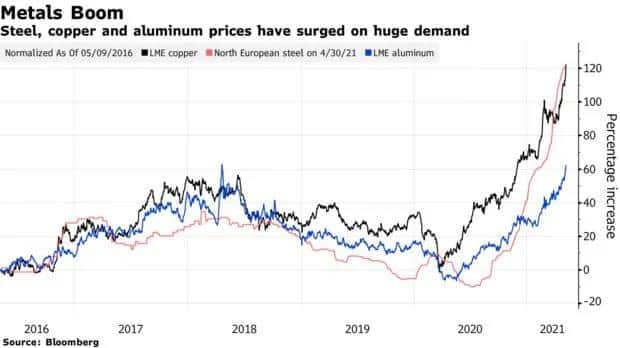
彭博社消息显示,生钢等价格已经上升到2020年疫情时期的10倍至百倍。导致该行业商品价格上涨的主要因素是底盘,发动机和车轮所需的钢材。随着中国-迄今为止最大的生产国-采取措施抑制产量,该金属最近的涨势打破了纪录。电动汽车使用的铜比汽油消耗者多出近3.5倍。
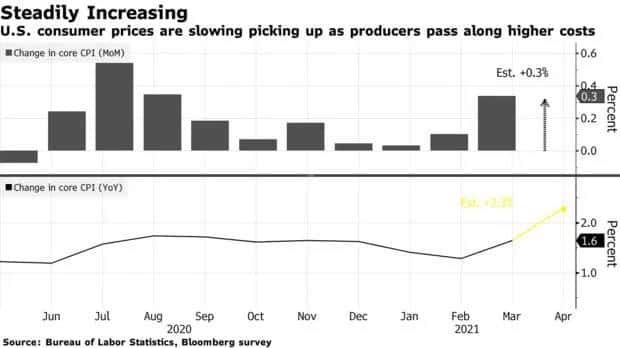
4月份备受关注的CPI核心通胀将急剧上升至2%以上。通货膨胀压力正在上升,并可能将利率提高至2019年以来的最低水平。货膨胀预期的主要市场替代指标飙升至2013年的最高水平。政府难以面对未来的通胀问题,也不敢轻易放弃货币宽松政策。上周美股科技股的表现以及周五非农数据都表明了目前市场和经济的脆弱性。对于我们澳洲华人投资者,最重要的,就是继续保持稳定的正现金流,同时做好保护养老金的准备。如果未来市场出现新的变化,我们能够及时对养老金做出调整。从政府角度来看,先稳定经济,后稳定通胀,将成为近2个月的主流政策。
图形分析
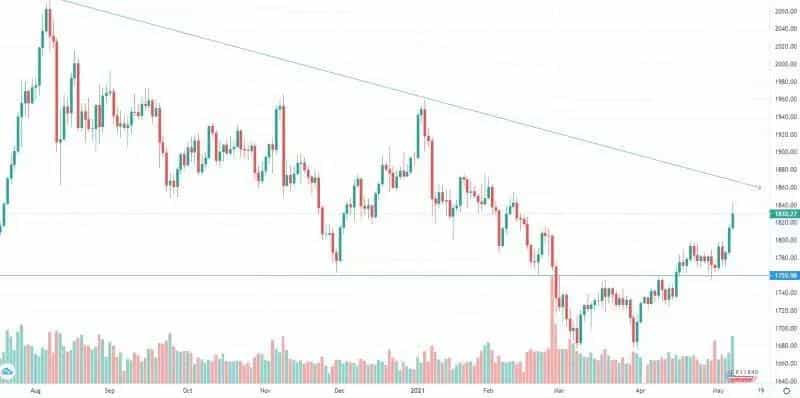
XAUUSD:黄金价格突破了1800美金之后,下一个目标价格1860美金。下方支撑价格为1800美金和1760美金。对于黄金,我们此前报告给出今年底价格在1830上方。受到上周非农影响,已经达到1830目标价格。新的区间幸成。未来短期将在1760-1860美金震荡。免责声明:GO Markets分析师或外部发言人提供的信息基于其独立分析或个人经验。所表达的观点或交易风格仅代表其个人;并不代表GO Markets的观点或立场。联系方式:墨尔本 03 8658 0603悉尼 02 9188 0418


The information provided is of general nature only and does not take into account your personal objectives, financial situations or needs. Before acting on any information provided, you should consider whether the information is suitable for you and your personal circumstances and if necessary, seek appropriate professional advice. All opinions, conclusions, forecasts or recommendations are reasonably held at the time of compilation but are subject to change without notice. Past performance is not an indication of future performance. Go Markets Pty Ltd, ABN 85 081 864 039, AFSL 254963 is a CFD issuer, and trading carries significant risks and is not suitable for everyone. You do not own or have any interest in the rights to the underlying assets. You should consider the appropriateness by reviewing our TMD, FSG, PDS and other CFD legal documents to ensure you understand the risks before you invest in CFDs. 免责声明:文章来自 GO Markets 分析师和参与者,基于他们的独立分析或个人经验。表达的观点、意见或交易风格仅代表作者个人,不代表 GO Markets 立场。建议,(如有),具有“普遍”性,并非基于您的个人目标、财务状况或需求。在根据建议采取行动之前,请考虑该建议(如有)对您的目标、财务状况和需求的适用程度。如果建议与购买特定金融产品有关,您应该在做出任何决定之前了解并考虑该产品的产品披露声明 (PDS) 和金融服务指南 (FSG)。
.jpg)