

市场资讯及洞察
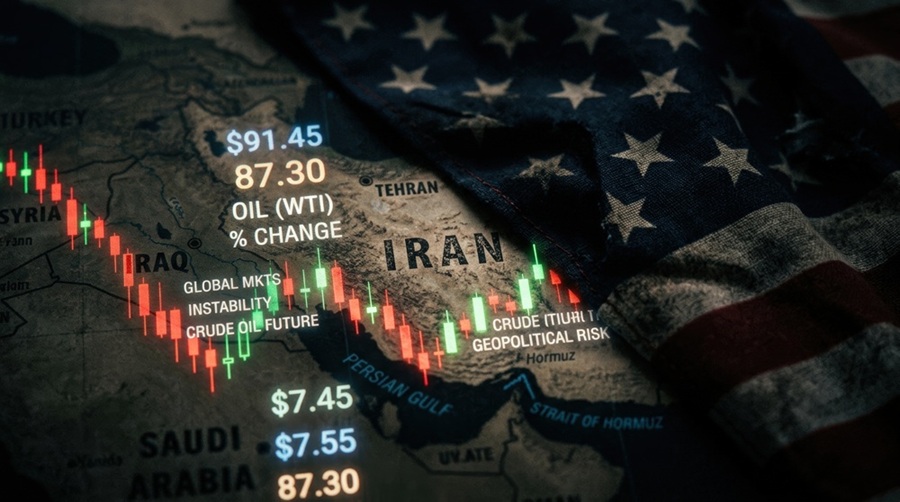
石油市场习惯于在停止结算之前就看上去已经定下来了。这就是现在的设置。
随着伊朗周边冲突的加剧,霍尔木兹海峡的交通量急剧下降,越来越多的船只因关闭AIS或自动识别系统而陷入黑暗,这些信号通常显示船只在哪里移动。霍尔木兹不只是另一条航道。它是世界上最重要的能源阻塞点之一,因此,当能见度开始消失时,供应风险就会回到对话的中心。
为什么现在这很重要
这很重要,有两个原因。
头条新闻是一回事。市场影响是另一回事。石油不仅关乎有多少桶,还关系到这些桶能否流动,谁愿意为它们投保,买家准备等待多长时间,以及交易者认为他们需要在多大风险的基础上定价。
目前,有三件事同时发生冲突:航运中断、外交脆弱以及市场已经严重倾向于一个方向。这种组合可以使布伦特原油的走势比基本面本身通常所暗示的要快。
是什么推动了这一举动
1 供应能见度恶化
第一个驱动程序很简单。市场看得更少,这往往会让市场更加紧张。
通过霍尔木兹的过境量急剧下降,而越来越多的交通量涉及不再广播标准跟踪信号的船只。简而言之,正常通过重要走廊的船只越来越少,越来越多的活动也变得越来越难以追踪。这并不自动意味着供应即将崩溃。但这确实意味着不确定性正在上升。
2 伊朗的储存缓冲区可能有限
第二个驱动因素是伊朗的出口和储存限制。
陆上储存容量估计约为4000万桶,市场正在关注有人所说的16天红线。到那时,长期的出口中断可能会开始迫使减产,以避免对储油库造成损害。对于新读者来说,要点很简单。如果石油不能储存足够长的时间,问题可能不再是出口延迟,而是开始成为真正的供应问题。
3 定位可以放大移动
第三个驱动因素是定位,这只是市场简写,说明在下一步行动发生之前交易者已经如何进行设置。
在这种情况下,投机性原油头寸显得严重片面。这很重要,因为当市场向一个方向倾斜得太远时,触发急剧调整并不需要太多时间。新的地缘政治冲击可能迫使交易者迅速采取行动,而一旦开始,价格的上涨幅度可能会超过单纯基础新闻所能证明的合理性。
为什么市场在乎
石油冲击很少能在能源市场内得到控制。
较高的原油价格可能会开始出现在运费、制造业和家庭能源账单中。这意味着通货膨胀预期可能会再次开始攀升。各国央行已经在努力管理粘性通货膨胀和疲软增长之间的艰难平衡,因此石油价格上涨会使这项工作变得更加艰难。
这不仅仅是一个关于石油生产商获得提振的故事。当能源成本上升时,航空公司、运输公司和其他对燃料敏感的企业可能会迅速承受压力。如果石油价格上涨使通货膨胀保持强于预期,则更广泛的股市可能还必须重新考虑政策前景。
连锁反应远不止石油
还有一个货币角度,它不如最初出现的那么简单。
当原材料价格上涨时,与大宗商品挂钩的货币,例如澳元,通常会获得支撑。但是这种关系不是自动的。如果石油价格因为全球需求改善而攀升,那可能会有所帮助。如果由于地缘政治风险激增而攀升,则市场可能会转向避险模式,即使大宗商品价格上涨,这也可能打压澳元。
这就是让这种举动比乍一看更有趣的原因。同样的石油涨势可以支撑市场的一个部分,同时给另一部分带来压力。
框架中的资产和名称
布伦特原油仍然是广泛供应风险中最明显的解读。如果交易者想要最简洁的头条新闻表达,通常是他们首先看的地方。
- 埃克森美孚是画面中最明显的名字之一。油价上涨可以支撑已实现的销售价格和短期的盈利势头,尽管这从来都不像石油上涨、囤积那么简单。成本、生产结构和更广泛的情绪仍然很重要。
- NexTera Energy 又增加了一层。这个故事不仅仅是关于化石燃料的。当能源安全成为一个更大的问题时,国内电力弹性、电网投资和替代发电的理由也将得到加强。
- 澳元/美元是另一个值得关注的市场。澳大利亚与大宗商品周期密切相关,因此原材料价格走强有时可以支撑该货币。但是,如果市场对恐惧的反应大于对增长的反应,那么通常的顺风可能不会成立。
对于新读者来说,关键是石油走势不会以整齐的、可预测的线条在市场中传播。它们不均匀地向外波动,帮助某些资产,给其他资产施加压力,有时两者兼而有之。
可能会出什么问题
强烈的叙述与单向交易不同。
停火可以比预期更快地稳定航运。欧佩克+可以通过提高产量来抵消部分紧张局势。来自中国的需求数据可能会令人失望,将焦点转移到消费疲软而不是供应受限上。而且,如果地缘政治溢价消退,石油回落的速度可能比当前情绪所暗示的要快。
对于新读者来说,要点很简单。石油涨势可以是真实的,但不是永久性的。短期内,中断风险可能证明此举是合理的,然后如果这些风险缓解或需求疲软,则迅速逆转。
市场不再孤立地对石油进行定价。这是定价可见性、运输安全性以及供应中断蔓延到通货膨胀、货币和更广泛的风险情绪中的风险。
这就是为什么Hormuz很重要,即使对于从未自己交易过一桶原油的读者来说也是如此。


Li Auto Inc. (NASDAQ: LI) released Q3 results before the market open in the US on Thursday. Let’s take a look at how the Chinese company performed. Company overview Founded: 2015 Headquarters: Beijing, China Number of employees: 19,396 (2022) Industry: Automotive Key people: Li Xiang (Chairman and CEO), Yanan Shen (President), Tie Li (CFO) The results World’s 12th largest automaker reported revenue of $4.749 billion for Q3 (up by 271.2% year-over-year), above analyst estimate of $4.581 billion.
EPS reported at $0.449 per share vs. $0.368 per share expected. The electric vehicle company delivered 105,108 cars in the previous quarter – up by 296.3% from the same period in 2022. Li Auto has delivered 284,647 vehicles so far this year.
CEO commentary "In response to the evolving market demand in the third quarter, we continued to strengthen synergies across production, supply, and sales, while enhancing our production capability. With these efforts, we achieved a number of breakthroughs across our delivery performance during the quarter, becoming China’s first emerging new energy automaker to reach the milestone of 500,000 cumulative deliveries. Each of our three Li L series models recorded over 10,000 monthly deliveries for three consecutive months since August, maintaining our position as the sales champion among SUVs and NEVs priced over RMB300,000 in China.
As we further expand our business scale, we will continue to maintain our profitability at a healthy level, while investing in research and development to propel the long-term growth of our business," Chairman and CEO of Li Auto, Li Xiang said in a press release to investors. The stock was down by around 2% on Thursday despite posting better-than-expected results. Shares of Li Auto are up by 118.68% in the past year at $38.28 a share.
Stock performance 1 month: +10.41% 3 months: -11.16% Year-to-date: +86.62% 1 year: +118.67% Li Auto price targets B of A Securities: $60 Barclays: $48 Citigroup: $54.3 HSBC: $36 Jefferies: $20.66 Li Auto Inc. is the 453rd largest company in the world with a market cap of $38.17 billion, according to CompaniesMarketCap. You can trade Li Auto Inc. (NASDAQ: LI) and many other stocks from the NYSE, NASDAQ, HKEX, ASX, LSE and DE with GO Markets as a Share CFD. GO Markets now offers pre-market and after-market trading on popular US Share CFDs.
Trade the pre-market session: 4:00am to 9:30am, normal session, and after-market session: 4:00pm to 8:00pm, Eastern Standard Time. Volatility never sleeps. Trade over earnings releases as they happen outside of main trading hours Reduce your risk and hedge your existing positions ahead of a new trading day Extended trading hours on popular US stocks means extended opportunities Sources: Li Auto Inc., TradingView, MarketWatch, CompaniesMarketCap, Wikipedia, Benzinga, Macrotrends
The recent surge in gold prices, following recent events in the Middle East and the declining US Dollar (DXY), raises the question: Is this the end of the bull run for Gold (XAU/USD)? Gold started rising earlier this month after rejecting the price level of 1815.00. Since then, it has steadily climbed back to its previous peak of 1984.00, a resistance point that was notably challenging to breach in July.
This recent surge in gold prices, due in part to recent events in the Middle East, is attracting more bullish activity in the gold market. Simultaneously, the declining value of the US Dollar (DXY) has contributed to the upward movement of gold prices. Where can we see gold go in the near future?
In the market, assets tend to move in one of three directions: up, down, or sideways, often referred to as consolidation. Given that gold has reached its previous peak, it may seek potential support, which appears to be around 1930-1931. Concurrently, the US Dollar is experiencing a decline in value.
If gold manages to surpass the resistance at 1984.00, the next hurdle could be at 2060.00. This level is evident on the daily timeframe, where the price has approached 2060 on multiple occasions, only to be rejected. What about the DXY and XAU/USD?
The relationship between DXY (Dollar Index) and gold (XAU/USD) is intricate. Sometimes, when the dollar index is declining, the price of gold tends to move sideways or increase. However, examining larger time frames like the 4-hourly or daily charts reveals an inverse pattern of rejection and price rise between these two markets.
It's important to note that gold's movements are not solely dependent on the USD; other significant factors, including news, social and geo-political events can also play a substantial role in influencing its price fluctuations. Why is gold so important? Apart from its physical shine and the enduring symbolic connection with wealth seen throughout human history, gold holds significance as a historically reliable store of value and a means of exchange.
Unlike many other commodities, gold does not diminish or get depleted, giving it a timeless sense of worth. It can act as a safeguard against the erosion of currency value caused by inflation, prompting numerous investors to view gold as an alternative asset and a method of preserving their wealth. How can I trade gold?
At GO Markets, we provide Metal CFDs for trading, offering not only gold but also silver and copper futures. Our goal is to deliver an exceptional trading experience to our clients. We take pride in offering one of the best online trading platforms for gold, silver, and copper futures, in addition to providing access to FX, Soft Commodities, Shares, and Indexes, enabling our clients to diversify their investments across various financial markets.
The Walt Disney Company (NYSE: DIS) reported its fourth quarter and full fiscal year 2023 results ending September 30, 2023, after the market close in the US on Wednesday. Company overview Founded: October 16, 1923 Headquarters: Team Disney Building, Walt Disney Studios, Burbank, California, United States Number of employees: 220,000 (2022) Industry: media, entertainment Key people: Mark Parker (chairman), Bob A. Iger (CEO) The results World’s third largest entertainment company reported revenue of $21.241 billion for the quarter (up by 5% year-over-year), narrowly missing analyst estimate of $21.369 billion.
Revenue for the full year reached $88.898 billion, an increase of 7% from the previous year. Earnings per share reported at $0.82 per share, above analyst estimate of $0.71 per share. EPS for the full year reached $3.76 per share.
Disney+ added 7 million core subscribers during the previous quarter. CEO commentary "Our results this quarter reflect the significant progress we’ve made over the past year," Robert A. Iger, CEO of Disney commented on the latest results. "While we still have work to do, these efforts have allowed us to move beyond this period of fixing and begin building our businesses again.
We have a solid foundation of creative excellence and innovation built over the past century, which has only been reinforced by the important restructuring and cost efficiency work we’ve done this year, and we’re on track to achieve roughly $7.5 billion in cost reductions. Combined with our portfolio of valuable businesses, brands and assets – and the way we manage them together – Disney has a strong hand that differentiates us from others in our industry." "As we look forward, there are four key building opportunities that will be central to our success: achieving significant and sustained profitability in our streaming business, building ESPN into the preeminent digital sports platform, improving the output and economics of our film studios, and turbocharging growth in our parks and experiences business. We have already made considerable advancements in these four areas and will continue to move forward with a sense of purpose and urgency, and I’m bullish about the opportunities we have before us to create lasting growth and increase shareholder value," Iger concluded.
The latest results had a positive impact on the stock in the after-hours trading. Shares were up by around 3%.The stock is down by 2.59% in the past year at $84.50 per share. 1 month: -0.41% 3 months: -3.42% Year-to-date: -2.74% 1 year: -2.59% Walt Disney price targets JP Morgan: $120 Seaport Global: $93 Bernstein: $103 Rosenblatt: $103 B of A Securities: $110 Truist Securities: $105 Raymond James: $97 Wells Fargo: $110 Goldman Sachs: $136 Deutsche Bank: $135 Walt Disney is the 68th largest company in the world with a market cap of $154.61 billion, according to CompaniesMarketCap. You can trade The Walt Disney Company (NYSE: DIS) and many other stocks from the NYSE, NASDAQ, HKEX, ASX, LSE and DE with GO Markets as a Share CFD.
GO Markets now offers pre-market and after-market trading on popular US Share CFDs. Trade the pre-market session: 4:00am to 9:30am, normal session, and after-market session: 4:00pm to 8:00pm, Eastern Standard Time. Why trade during extended hours?
Volatility never sleeps. Trade over earnings releases as they happen outside of main trading hours Reduce your risk and hedge your existing positions ahead of a new trading day Extended trading hours on popular US stocks means extended opportunities Sources: The Walt Disney Company, TradingView, MarketWatch, CompaniesMarketCap, Wikipedia, Benzinga

热门话题最近澳洲的消息有点多:第一件事,是澳大利亚总理Albanese 在北京会见中国国家主席。标志着中澳关系出现缓和,未来中国澳洲的华人们福利多多,贸易旅游往来也会逐渐恢复。Albanese成为7年来首次访问中国的国家领导人。中澳总理年度会晤联合成果声明:双方欢迎恢复中澳高级别对话。第二件事,就是澳洲加息了。澳洲加息这件事情,在三四个月之前,我就一直在强调,澳洲至少还有一次加息。大家可以通过Youtube搜索GO Markets找到Jacky过去的视频,就可以看到。为什么加息呢?逻辑很简单,圣诞节之前,得来这么一次。如果痛是一定要发生的,就让痛来得快一点,而不是一直悬在脑袋上。Michele在上任的第一个月,还没有时间加息,而12月是圣诞节,更不可能了。12月加息就会影响大部分有房产朋友的心情,好不容易躺在沙滩上度假,结果打开手机发现,过节的时候,澳洲加息了,瞬间假期不香了,加息导致旅游经费超出预算了。所以,11月是最好的选择。加息后,澳洲股市下跌,最多下跌超1%,收盘时下跌0.3%左右。
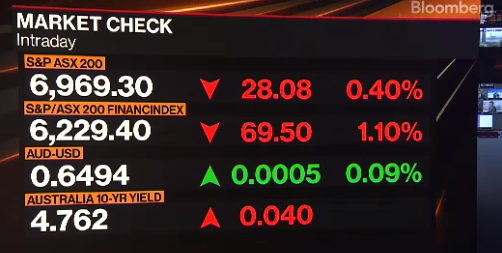
好消息是什么呢?大部分人认为这是澳洲最后一次加息,主要目的还是在高消费旺季的圣诞节到来之前,把通胀压一压,防止通胀反弹。自2022 年 5 月以来,澳洲联储已加息13 次。那么为什么之后加息的概率很低呢?主要还是跟政治有关。工党政府在中期民调中民调下滑,正在努力控制加息对房主的影响,同时承认需要抑制通货膨胀。这本身就很矛盾。所以,就像我们做交易,你入场了,亏了,是继续加仓,还是多等一段时间?目前澳洲央行就是,正在通过加息做空通胀,稍微加加仓,加个0.25%,让子弹飞一会,静待通胀下跌。澳洲联储正在努力确保通胀在 2025 年底前回落至 2-3% 的目标范围内。
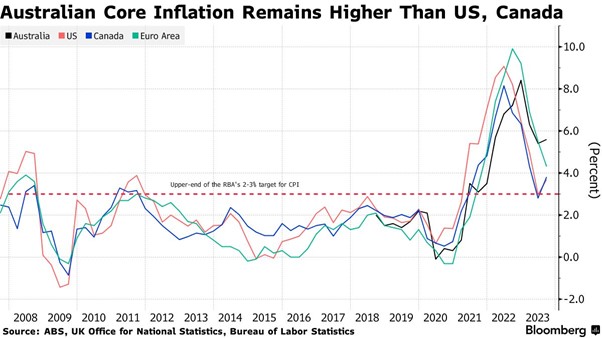
在一系列强于预期的通胀和零售销售报告迫使澳大利亚央行采取行动后,周二央行将现金利率提高了四分之一个百分点至4.35%,这是五个月来的首次政策举措。这是行长米歇尔·布洛克 (Michele Bullock) 领导下的首次加息,现金利率升至 2011 年以来的最高水平。同时暗示进一步收紧政策的障碍更大,从而推低了澳元。甚至部分彭博经济学家预测,未来澳联储的行动是降息。而澳洲房地产市场已反弹至接近历史高位,零售额增幅超出预期,商业信心依然强劲。人口激增也对经济有帮助,这增加了对住房、交通和外出就餐等各方面的需求。所以,未来的加息可能性还是存在的。我们再来看美国美联储的态度,昨晚美联储理事鲍曼:我仍然预计我们需要进一步提高联邦基金利率。尽管如此,他也承认通胀有望回到3%以下,同时就业和经济开始疲软。所以本质上来说,美国保留了加息的可能性,但是不再坚定的加息。而是给通胀反弹留了一个后手。意思就是,通胀反弹到没办法控制,我还是加息。但是,目前来看,还不错。所以,相比于美国,澳洲未来继续加息的概率低于美国,对于金融市场买预期卖事实来说,澳币冲高回落也在合理范围内。在过去几周里,加息预期不断升温,使澳元在 G10货币中大幅上涨。市场的定价不仅是今天加息,还包括在本轮周期内再次加息。然而,澳洲联储的声明未能证实这种鹰派立场,而是采用了依赖数据的方法来评估进一步紧缩的需求。
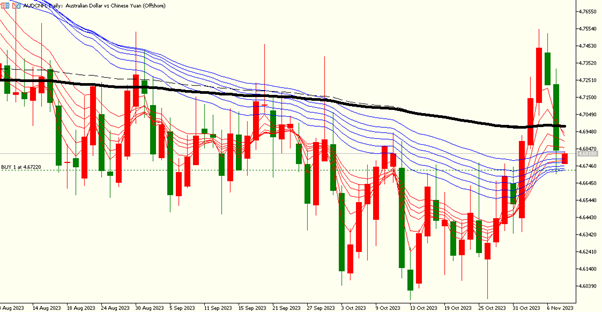
AUDCNH价格回落到4.7下方,再次迎来底部建仓机会免责声明:GO Markets分析师或外部发言人提供的信息基于其独立分析或个人经验。所表达的观点或交易风格仅代表其个人;并不代表GO Markets的观点或立场。联系方式:墨尔本 03 8658 0603悉尼 02 9188 0418中国地区(中文) 400 120 8537中国地区(英文) +248 4 671 903作者:Jacky Wang | GO Markets 亚洲投研部主管
Tuesdays FX session is turning out to be a mirror image on Monday’s session Where the USD was battered against its major peers. Today, seeing almost a full retrace of those moves as USD is once again king. The Dollar Index (DXY) respected the upward trendline support that has led DXY higher since July (with the exception of a brief break in early September).
A less aggressive CNH fix by the PBoC and sour risk sentiment also helping the Dollar. DXY rebounding strongly in Tuesday’s session so far, the 105 level will be key. DXY has found increasing resistance above this level for the last 12 months and with an empty news calendar in the US a push higher through the key 105 level in today’s session would be tough going.
GBPUSD had an initial and very brief spike higher on a hot headline UK average earnings figure, but quickly retraced from a high of 1.2530, losing the psychological 1.2500 as other jobs data painted a grim picture, with the unemployment rate a 200k+ drop in the employment and downward revisions on previous data weighing on Sterling. USDJPY continued to march higher, looking to fill the gap after the Monday open gap down on Japanese jawboning over the weekend. USDJPY did breach the psychological 147 level earlier in the session but has found some resistance there and at the 23.6 Fibonacci level (147.06) going into the US session.
AUDUSD gave back some of the big gains in Mondays session, but a rebound in the price of iron ore and a relatively firm CNH helped the Aussie stem it’s losses against the USD and certainly out performed its Antipodean rival the NZD. AUDUSD holding the key 0.6400 level trading within 0.6417-40, AUDNZD trading near the top of its recent range, getting to a high of 1.0885 in the Asian session. NZD undermined by downgrades to NZ fiscal projections in a pre-election report.
The US economic calendar is empty of key risk events in Tuesday’s session, all eyes will be on tomorrows pivotal CPI report though.
Comments from Bank of Japan governor Ueda over the week saw USDJPY gap significantly lower at the Asian session open. The pair now trading well under 147 from eight-month highs at Fridays close. Ueda commented that the BoJ cannot rule out that they might have sufficient data by year-end to determine whether they can end negative rates, this brings the timeline forward of Japanese normalization, previously not signaled to begin until 2024.
US-JPY rate differentials compressed on the news, with the predictable move in USDJPY to the downside. USDJPY found some support at the 4H trendline and has retraced some of its losses in the EU session, hovering just below the key resistance level of 146.63, a resistance level that capped gains in the pair during August. Key UK wage and jobs data released on Tuesday, is looking to show some cooling in the UK jobs market but probably not enough to avoid a September BoE rate hike.
GBPUSD holding the major support at 1.2450 and continuing to rise, reclaiming the psychological 1.2500 level, and piercing trendline resistance to the upside. Tomorrows figure, if a big miss or big beat, should see some action in GBP as rate hike/hold odds adjust. The Aussie dollar has surged today, AUDUSD breaking out of its tight September range and reclaiming the major S/R level at 0.6400.
AUD gaining alongside the CNH after the PBoC set the strongest fix signal on record. Chinese data released over the weekend also showing the worlds second largest economy bouncing back from deflation.