市场资讯及洞察
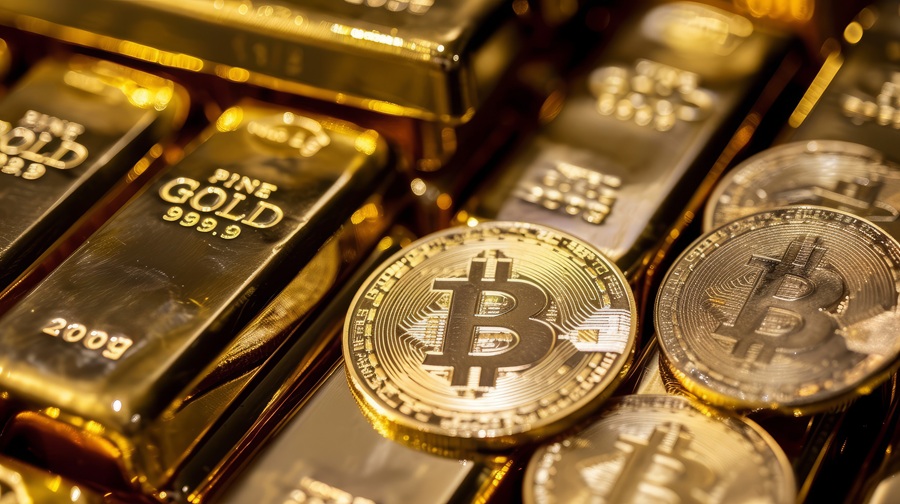
当特朗普政府在 2 月底将全球关税推高至 15%、中东地缘政治风险再次燃起,且凯文·沃什(Kevin Warsh)的美联储主席提名向债市发出鹰派震慑时,黄金表现出了它在压力时期应有的姿态:应声上涨
比特币的表现则截然不同——它紧随纳斯达克的跌势。从 2025 年 10 月超过 126,000 美元 的巅峰起步,到 3 月初已暴跌近 50%,回落至 60,000 美元上方。这种走势的分化才是重点:黄金表现得更像避难所,而比特币则像是一个捆绑了额外杠杆的高贝塔(High-beta)科技股。
对于差价合约(CFD)交易者——即那些通过杠杆博取价差而非持有实物的投资者来说,这种区别并非学术讨论,它直接揭示了当你进入这两个市场时,你交易的本质究竟是什么。
驱动力分析
黄金正同时受到三股力量的推动:全球央行的持续囤积、投资者对冲货币贬值的需求,以及针对关税政策和地缘政治新闻的响应式避险资金流入。
比特币的驱动因素显得更为复杂且充满“噪音”,尤其是考虑到它仍受惠于机构化的渗透、现货 ETF 的支撑,以及那套关于“数字黄金”的长盛不衰的叙事。然而,其短期价格逻辑已日益转向由杠杆水平主导。量化风控柜台(Algorithmic risk desks)如今已将比特币与科技权益类资产划入同一“风险池”。因此,每当华尔街的“恐惧指标” VIX 飙升时,这些交易模型往往会自动触发对比特币敞口的减持。这种抛售是机械化的程序反应,而非投资逻辑层面的根本动摇。
市场为何关注
这正解释了为什么两类通常都被冠以“避险资产”头衔的标的,却可能在同一天呈现出截然相反的走势。
CFD 交易员观察要点
黄金的问题在于,这一轮涨势目前显得有些“力竭”。1 月份那几个交易日内约 14% 的跌幅提醒了我们:拥挤交易 (Crowded trades) 是一把双刃剑,尤其是当杠杆机构需要套现筹措资金,并不得不抛售手中流动性最好的资产时。比特币可能在短短一小时内波动数个百分点,而其原因可能与当早宏观新闻中的叙事毫无关系。而在 CFD 杠杆的加持下,这种波动性会在多空两个方向上被同步放大。
哪些变数可能扭转局面?


City of London Feeling the Brexit Effect Not a day goes by without Brexit being mentioned and we can expect more of this to continue for some time, even after Britain leaves the European Union next year. With the International Monetary Fund (IMF) cutting its economic growth forecast for Britain for the coming years, are we also starting to see the impact of it on the City of London – the biggest financial centre in the world? Morgan McKinley has shown that the number of jobs available in December 2017 fell by around 52% month-to-month, a much bigger decline compared to the 30% drop seen over the same periods in 2015 and 2016. “In December, the city is abuzz with holiday parties, not hiring, so a drop is to be expected, but for it to be such a seismic drop is alarming” said Hakan Enver, the operations director for financial services for Morgan McKinley.
Year-on-year we have seen 37% fall in vacancies which is a completely different picture to when we look at figures in 2015 and 2016 when we saw a 16% increase in job openings. A recent survey by account firm Binder Dijker Otte (BDO) has shown that the United Kingdom has dropped out of the ranking for top six countries for potential migrants from the European Union. Paul Eagland, managing partner at BDO said the government must act to secure the UK’s access to talent: “UK businesses are already struggling with a skills shortage.
The impact of the EU referendum and uncertainty around a new trade deal is likely to make this worse.” “It’s absolutely imperative that the Government makes it clear to the world that the UK is still a great place to do business and that we continue to attract the world’s brightest and best to our country”. UK’s former immigration minister, Brandon Lewis, said that the issue of skilled worker visas was up by 38% but that is unlikely to make up the difference. Mr Enver said: “On the one hand, it’s great that the UK is still being considered an attractive destination from countries outside of the EU.” “However, on the other hand, there are signs that European employees are becoming less captivated by the draw of working in this country.” “2017 was the year we were told we’d have an exit strategy and a transition plan.
We have neither. “As new rounds of talks kick off, let’s hope 2018 brings the much-needed clarity and stability everyone’s waiting for.” A challenging time for the financial sector in Britain.
The US official trade deficit number with China is $375.2bn in 2017. But According to China Customs General Administration, this number should be $275.8bn. Notice there is a vast gap between the versions from two sides.
So, which version is closer to the facts? Firstly, let’s start this debate by looking at the US perspective. Previously in the 1990s and early 2000s, most of the imports from China were low-value, labor-intensive products such as toys, clothes, footwear, etc.
And even now, China are still producing these kinds of products. However, over the past decade, an increasing proportion of US imports from China are more technologically advanced products (US calls it ATP). From the table below, we can see that, among the top 5 categories of import products, three of them are ATP by the US’s definition.
According to the U.S. Census Bureau, U.S. imports of ATP from China in 2017 totaled $171.1 billion. Information and communications products (i.e., Phones and Pads) were by far the most significant U.S.
ATP import from China, accounting for 91% of U.S. ATP imports from China and 60% of U.S. global imports of this category (see table below). This would generally go against common sense, right?
Let me explain. As we all know, Apple is the largest company in the world to produce mobile phones and IPads, and the second largest is Samsung, which is a Korean company. Although Huawei is the third largest mobile phones producer, the US government entirely banned Huawei from entering the US market due to “national security” reasons.
So how did phones and pads become the largest category that the US imported from the Chinese? An explanation from China's point of view helps reveal this mystery. Firstly, there are two terms that we learned in Economics 101, Finished Product and Intermediate goods.
An intermediate good is a product used to produce a finished product. For example, in the case of producing an iPhone, Chinese factories contribute only 6% of the components (which is Assembly). All the other significant parts such as Hardware, Touchscreen& Glass, Battery, etc. these typically come from other countries such as South Korea and Japan.
If we take all those parts which come from Korea & Japan out of the US/China Trade Balance, the trade deficit will decrease one-third straight away. Below is a breakdown of the costs for various components of an average iPhone. Moreover, when an iPhone finished assembly and shipped and sold to US customers, it was Apple, a US company, who earned most of the profits, not Chinese assembly factories.
However, just because the assembly is the last step of the manufacturing process, and the phones did “shipped from China to the US,” the US government defined this as “imports from China.” Based on this knowledge, it appears the US might be deliberately twisting the terminology to fool the general public, helping to fuel the current dispute against China. There are hundreds more similar examples like this. These include iPhone, Dell who assembles their laptops in Shanghai, Boeing who assembles their planes in Tianjin, and most recently, Elon Musk who announced that he wants to open an assembly factory in Shanghai.
In conclusion, the US government seems to be exaggerating the trade deficit figures to help justify starting a trade war with China. This idea may sound like a conspiracy, but when you consider the many influential world powers throughout history who have leveraged their strength and resources to suppress their competitors, it makes more sense. Particularly those deemed to be in second place.
Think about the cold war between the US and Soviet Union; it just passed not too long ago. Lanson Chen GO Markets Analyst This article is written by a GO Markets Analyst and is based on their independent analysis. They remain fully responsible for the views expressed as well as any remaining error or omissions.
Trading Forex and Derivatives carries a high level of risk. Sources: USCITC DataWeb, US Census Bureau, Teardown.com
Central Bank Interest Rates By Klavs Valters A central bank's interest rate is a rate at which it typically lends money to local banks. This interest rate is charged by nations’ central or federal banks on loan advances to control the money supply in the economy and the banking sector. Each central bank has its own annual schedule when announcing its rates.
In the trading world, it's prudent to keep a tab on these announcements as it impacts market volatility if there is a sudden interest rate rise or fall. These rates also have an impact on everyday life, as they often determine what you pay for borrowing money, as well as what the bank will pay you for saving money. Recent Rate Hikes The most recent rate hike came from the US Federal Reserve back in March 2018, when it increased its rates from 1.5% to 1.75%.
Additionally, the Federal Reserve also signalled its intention to further raise this rate in the future. This has been the sixth time the US Federal Reserve has raised its interest rates since the 2008 financial crisis. Bank of Canada increased its key interest rates back in January by 0.25% to 1.25% while quoting a number of upbeat news stories, including an economy that is running flat-out, healthy job gains, and the lowest unemployment rate in over 40 years.
This has been Bank of Canada's third rate hike since the summer of 2017, and the first time the overnight rate has been above 1% since 2009. Current Bank Interest Rates Central Bank Interest Rate Announcement Timetable for 2018 To keep up to date with other news announcements, visit our ‘Economic Calendar’ section on our website - https://www.gomarkets.com/au/economic-calendar/
As Brexit concerns continue to weigh heavy on Pound Sterling crosses, there's not much to discuss from a technical perspective. Evidence of an overall bearishness sentiment dominates the charts with a few corrective moves thrown in for good measure. However, sifting through the layers of Sterling sameness, I uncovered something interesting relating to the GBPJPY, which might provide some trading opportunities longer-term.
First, taking a look at a daily chart above, notice we are hovering around the same price region as we were in August last year. Could this mean the pair is due for a change in direction? Perhaps.
What I find more intriguing is that for the past five years, August has been predominantly bearish for the GBPJPY pair when compared to other months. This seasonality chart from Bloomberg shows this more clearly. So how does this relate to longer-term trading opportunities?
If we are to believe that August is typically a bearish month, then we would be naturally inclined to seek short trades, and according to the point and figure chart below, I think I may have found one. Keep in mind that the seasonality data also suggests recoveries into December so we would need to trade with care. The bearish resistance line suggests we are currently in a downtrend with an increase in supply triggering a bearish trade signal as the price broke through the triple bottom support at 144.50.
At present, I am watching two downside targets should the fall in price exacerbate. These levels are located at 140.00 and 136.00 respectively. Alternatively, any upside move will need to re-test the 144.50 area which should act as resistance and also a rally above 146.00 to consider revising the overall trend.
Finally, if we study the short-term price action above on the hourly chart, it would seem the 100 Day Moving Average line in blue is helping to cap any bullish activity. The only time it has successfully managed to punch above the 100 MA this month has been to test the weekly pivot lines in black. If you are interested in other GBP analysis, I recently posted an article on GBPAUD here which I believe is another potential long-term opportunity.
For both these ideas, much will depend on Brexit certainty and how global trade talks progress in the coming weeks. By Adam Taylor CFTe This article is written by a GO Markets Analyst and is based on their independent analysis. They remain fully responsible for the views expressed as well as any remaining error or omissions.
Trading Forex and Derivatives carries a high level of risk. Sources: Tradingview, Bloomberg
Apple is the first company on this planet to reach a $1 Trillion Market value, each year continuing to release brand new innovative products including the latest iPhone to hit shelves. There is no doubt that Apple is the technology king of this generation given its following, constant growth, and company profits. However, can it maintain its innovation and high market value over the next ten years? ---------------------------------------------------------------------------------------------------------------------- We all know that every technology product has a life cycle.
Think about this: 30 years ago your family might get very excited when purchasing a new television, but are you still as enthusiastic if you buy a new TV today? No, because on the one hand, the technology is a lot cheaper and commonplace, and on the other, the notion of refining this product has arguably reached its ceiling. After Television, PCs and digital cameras also can’t escape from the same fate.
Once sold at high prices with premium product positioning, I still remember my first PC which cost around USD 2000, and even this was considered low in the 1990‘s. How about now? PC sales in 2017 have dropped to 263m, which is even less than the sales of iPhone 1 in 2007. ---------------------------------------------------------------------------------------------------------------------- You may not have noticed, but coinciding with Apple reaching a $1 Trillion, value, the two major suppliers for iPhone components——Sunny Optical Ltd (Listed in Hong Kong) & LARGAN Precision Ltd (listed in Taiwan) are both experiencing price shocks in the stock market.
Let me first briefly introduce this two companies. LARGAN Precision is a camera producer and provides five lenses for each iPhone. Its stock price has increased 1692% in the last decade.
Sunny Optical became camera lens model supplier for iPhone since 2007. After ten years, its stock price increased insanely 13068%! These miraculous returns are all based on the developing phase of smartphones.
However, the Smart Phone concept appears to be transitioning to its Mature Phase, and eventually, declining Phase. In the 4th Quarter of 2017, the total sales of the Smart Phone market have dropped for the first time. You'll notice from the chart that every smartphone company value fell, not just Apple and Samsung.
Regarding technology, Apple had already left the “Iron Throne” years ago. In the smartphone chips producing area, only two companies (LARGAN & Samsung) has achieved current Human Limit ——7nm (the thinner the chip, the harder for human technology to achieve) Only one company (Samsung) is willing to put money into R&D and pursue the impossible——3nm. Why has everyone else already given up? (which also means that the iPhone in the next few years will likely see little to no significant improvement, except the size, colour, and Price) The smartphone product is not far away from its tech limit.
It's perhaps not worthwhile to invest loads of money into R&D anymore. Alternatively, it might be better off to move their R&D forces to the next generational products, for example, GPU, VR, Drone, Artificial intelligence, or something even beyond our imagination at the moment. It is still too early to say whether Apple can keep its leading position in next 10 years, let’s wait and see.
By Lanson Chen – Analyst Lanson Chen @LansonChen This article is written by a GO Markets Analyst and is based on their independent analysis. They remain fully responsible for the views expressed as well as any remaining error or omissions. Trading Forex and Derivatives carries a high level of risk.
Sources: Statista, Apple, Google
市场回顾
- 澳洲股市高开低走,因为中国A股下跌而被拖累,从上涨2%,到收盘最后上涨0.4%。
- 中国股市大跌,上证指数下跌2.3%,深成下跌3.8%。
- 美股在12点开盘前期货下跌2%。
- 黄金没有大涨,依然在1700附近低位。
- 石油从68美元高点回落。比特币价格从51000下跌回到49000。
- 澳元从0.77和美元汇率回落至0.767。
热门话题
我们知道最近美股港股以及澳洲股市接连都出现了重大回调,那在回调中我们应该怎么去看待市场呢?哪些行业在这次下跌中影响会最大呢?我们看到在过去10天时间里,其实不仅仅是美国,就算是澳洲,香港恒生,以及中国A股都经历了连续的回调。那相信之前包括我同事Jacky和Allen都已经给大家分析过他们的看法,我也说过多次我本人对于目前美股下跌以及澳股下跌的看法。如果要总结,那就是两句话,1. 目前的下跌我认为是正常健康的回调。2. 在这次回调中,之前上涨最多的下跌也是最多,之前上涨少的,这次回调也少。我们都知道,从去年4月反弹开始,连续12个月的上涨,美股和其他主要股市都需要一轮回调来为将来更多的上涨做准备。同样的,恒生指数和中国A50我认为也是这样的走势,由于在新年到2月上涨过快,A50的涨幅甚至达到了惊人了20%,因此一次合理的回调几乎是所有人都认为随时会发生的事。而在中国A50的成分股中,光是酒和银行就占据了51%的比重,因此其实A50的核心涨幅动力就来自于酒和银行。那问题就更简单了,各位觉得,茅台未来价格是会继续保持在2000-3000甚至更贵,还是会回到多年前900一瓶的时代?如果你认为答案是前者,那A50未来的走势基本就可以判断了。

当然,在这轮回调里,其实科技股的下跌是很多的,尤其是美股里之前疯狂上涨的科技股,例如特斯拉。从高峰的900美元下跌到现在的600美元,跌幅高达33%。一下子挤出了大量的泡沫和水分。让我很高兴,因为我等待了很久,终于可以不用8,900价格进场特斯拉了。相比于其他电动车板块比如理想或者小鹏,特斯拉最大的一个不同就是:它在赚钱。其他所有,我说的是所有的电动车企业都是亏钱的。也就是说他们不得不靠不断融资输血来维持经营。这也是我判断是否长期投资一个企业的重要参考。同样的在澳洲和香港,也是科技股领跌。银行股强势护盘。但是但凡各位如果能看到下跌1/3,甚至更多,但是是正现金流的企业,不妨可以放到自己的观察名单中,给我们一个电话,我们来一起看看是否值得考虑。长期来说,大家不用担心,在美国疫情得到控制前,美联储不会开始减少刺激,而这个时间表至少也要到今年下半年。而且更重要的一个因素是:由于从2020年开始的大量货币增发,正在导致物价飞涨,不仅仅是房子,就算是超市的商品,金融产品以及任何以纸币来标价的物品,都会因为纸币的实际购买力的下降而价格上涨。这也是为什么过去的100多年美国股市从几百点到现在的几万点。不仅仅是公司盈利的增加,更加重要的是美元的不断增发导致的不断贬值。因此从大趋势来看,除非是世界大战,要不然任何东西都会越来越贵,房子是这样,股市当然也是。再来说说澳洲公司。昨天澳洲奔富酒的母公司股价突然上涨了最高达到8%,大家都知道这澳洲的红酒不是因为中国市场的限制而收到很大影响么,怎么股价还会突然上涨呢?作为澳洲最出名的红酒企业,奔富的母公司财富酒业的股价昨天突飞猛进,仿佛是中国对它额外反倾销税被取消了一样。结果我一查,没有取消啊,那为啥疯涨?再一查各大网站,原来是小道消息说有人可能要收购财富酒业。

其实大家知道,澳洲有很多耕耘多年,本身质量优秀的企业,产品和质量没得说,但是因为目前中澳的特殊关系而大受影响的,甚至于股价暴跌的,那这些优质资产,就成为了国际资本考虑的对象。而对于奔富来说,目前的当务之急就是要打开中国以外的市场,作为目前世界主要的红酒消费地区欧洲和美国,就成为了奔富目前的主要发展目标。而这次的收购方,据说就是来自于法国红酒集团或美国的私募基金。不论是哪一个,其目的都是为了帮助奔富打开更多的市场。今天我们抛砖引玉来说奔富这个事件,其实大家可以用心看看,澳洲有其他的一些长期优质企业,可能因为目前疫情,或者中澳关系而深受影响的,但是长期属于广泛性消费品或者服务性行业的,那他们被收购的可能会非常大。
图形分析
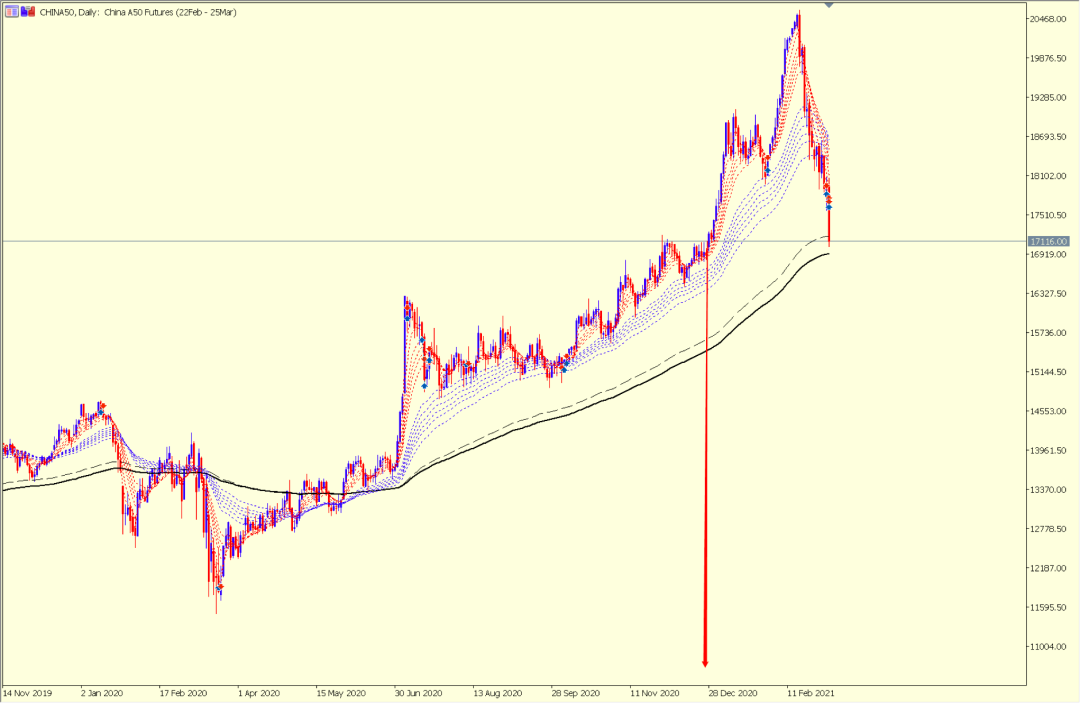
中国A50指数:从去年圣诞节,a50发动连续上涨,就是在现在的17000附近。到2月最高的20000点,几乎上涨了17%。现在又从20000点下跌回到了17000点。虽然跌了很多,但是没有打破长期的日线上涨趋势。大家先不要急于动手,先等等,1. 等16900支撑能不能守住。2. 等关键的反转信号。目前天天下跌这样的走势,不是个好的进场时机,我个人喜欢涨的时候买,不喜欢提前猜底部。免责声明:GO Markets分析师或外部发言人提供的信息基于其独立分析或个人经验。所表达的观点或交易风格仅代表其个人;并不代表GO Markets的观点或立场。