

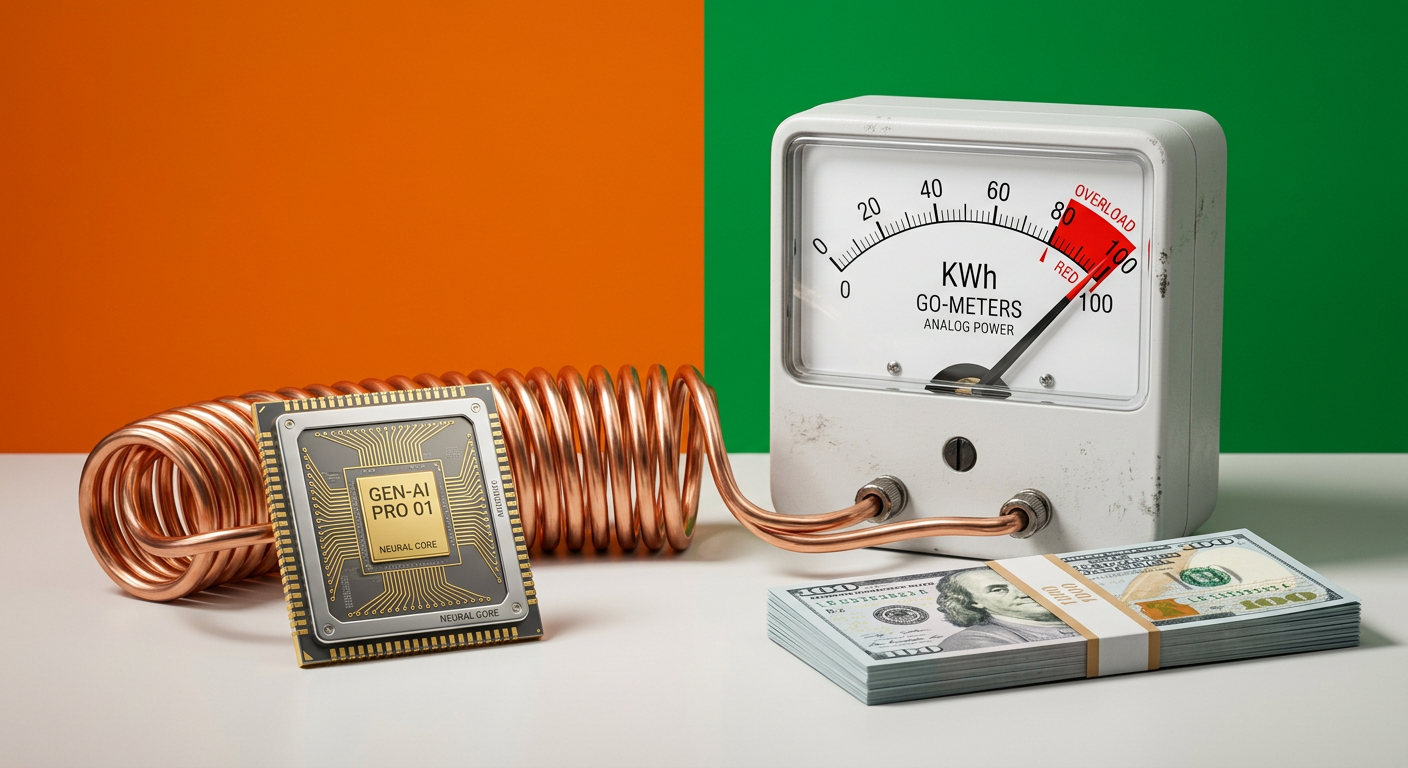

Siga o dinheiro e os gargalos para descobrir o que pode impulsionar os mercados de IA em 2027.
Spending money and making money are two very different things. The AI boom is driving enormous investment in chips, data centres and electricity, but is this another technology bubble or the beginning of something bigger?
A super-cycle is years of unusually strong demand and investment that can reshape an industry, not a few weeks of rising share prices. It may overlap with a market bubble if valuations run ahead of earnings, but neither guarantees higher prices.
For contract for difference (CFD) traders, the distinction matters. A multi-year theme can move technology stocks, commodities and currencies, but leveraged positions still face short-term volatility. So where is the money going, what could slow it down and which markets might react?
1. Big spending. Bigger expectations.
Big Tech cannot build AI capacity just by writing code. It needs data centres, servers and components. Consensus estimates compiled by Bloomberg and PIMCO put combined 2027 capital expenditure (capex) for Amazon, Alphabet, Meta, Microsoft and Oracle at roughly US$1.2 trillion, while S&P Global Ratings projects more than US$1.3 trillion across a broader group.
These are forecasts, not money already spent, and the size of the bill raises another question: where is the return?
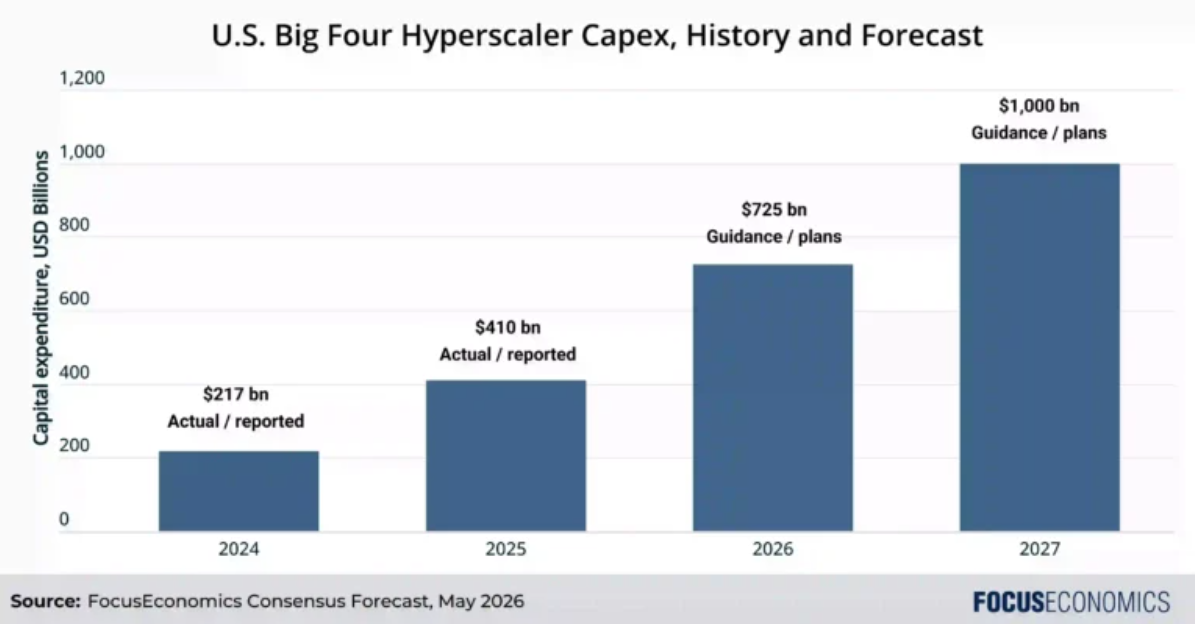
The spending is real. The payoff is still being tested.
Nvidia reported US$115.8 billion in Q3 fiscal 2027 revenue, including US$107.6 billion from data centres. That indicates strong hardware demand, but will Nvidia's customers earn enough from AI to justify their investments? Contracted cloud backlogs suggest future demand, but contracts are not the same as revenue earned or profit made. That is the tension behind AI spending versus revenue.
Why CFD traders care: The Nasdaq 100 and shares such as NVDA and AVGO may react to earnings, capex plans and financing costs. Strong spending can lift expectations, but weaker returns or higher bond yields could quickly change sentiment. And even if Big Tech can justify the investment, manufacturers still have to deliver the chips.
2. Money can't manufacture chips overnight
AI needs powerful hardware, and factories cannot download an upgrade to expand production. Graphics processing units (GPUs) handle the computing, high-bandwidth memory (HBM) feeds them data and advanced packaging connects everything. If one component falls behind, the finished system could be delayed.
TrendForce forecasts a 121% year-on-year rise in blended HBM average selling prices in 2027, partly reflecting the shift towards newer HBM4 products. That does not mean every memory chip will double in price, but it illustrates the pricing pressures that can emerge when demand outpaces supply.
The bottleneck behind the bottleneck
Taiwan Semiconductor Manufacturing Company's (TSMC) chip-on-wafer-on-substrate (CoWoS) packaging is another constraint, with industry reports suggesting some lead times have reached 40 to more than 52 weeks. Capacity is expanding, but manufacturing yields and delivery schedules still matter.
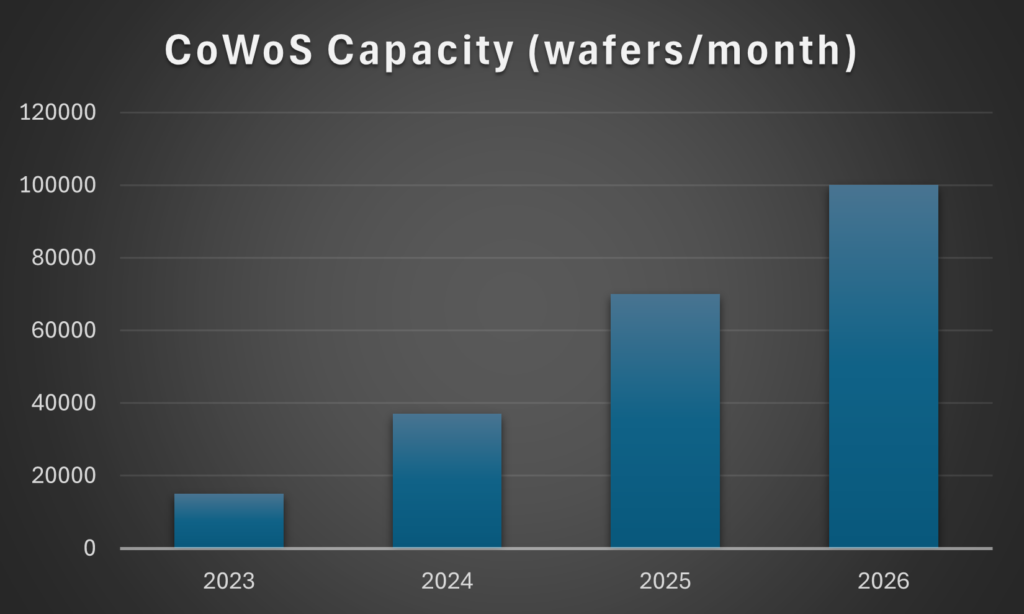
Custom AI chips offer alternatives to Nvidia hardware, but they still need manufacturing and packaging capacity, so the competition for chip capacity extends beyond one company.
Why CFD traders care: A chip shortage does not necessarily lift every semiconductor stock. Higher memory prices may benefit some suppliers while raising costs or delaying deliveries for others, meaning NVDA, TSM, MU and AVGO could react differently to the same headline. And even once the chips arrive, data centres still need somewhere to plug them in.
3. AI has an electricity problem
The fastest AI chip is not much use without a reliable power connection, and data centres need electricity, cooling systems and grid infrastructure before they can operate. Gartner forecasts global data centre electricity consumption rising from 565 terawatt-hours (TWh) in 2026 to 702 TWh in 2027, an increase of approximately 24% in one year.
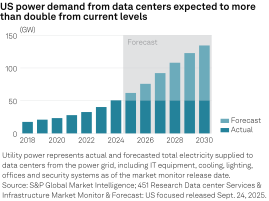
You can't build a power grid overnight
Grid connections and approvals can delay projects for years, which may sustain demand for utilities, power equipment, natural gas and copper, while postponing expected revenue for data centre operators. The tension between infrastructure demand and delivery timelines is also part of the AI power race.
That helps explain why AI stocks need mines. For Australian traders, copper and AUD/USD may signal industrial sentiment, although both respond to forces beyond AI.
Why CFD traders care: Electricity constraints may support demand for some suppliers while delaying growth for others. Energy prices, industrial activity, permits and the US dollar could all influence the market reaction.
Four markets, four different reactions
The chain is straightforward: spending creates orders, chips determine delivery and electricity determines when capacity can be used. A disruption anywhere along that chain could change market expectations.
What could move AI-linked CFD markets?
| Market or proxy | What could support it | What could weigh on it |
|---|---|---|
| Nasdaq 100, NVDA, AVGO, TSM | Sustained cloud spending and earnings growth | Capex cuts, valuation pressure or delivery delays |
| MU and memory shares | Tight HBM supply and firm pricing | Manufacturing setbacks, new capacity or softer demand |
| Copper, natural gas and utilities | Data centre construction and power demand | Project delays, restrictions or slower growth |
| AUD/USD | Resilient industrial and metals demand | A stronger US dollar or risk-off sentiment |
These are illustrative relationships, not price forecasts or recommendations. Instruments and availability vary by provider.
The problem with trading a multi-year story
There is a catch with any super-cycle: building for the future costs money today. S&P Global Ratings expects negative free operating cash flow across six major hyperscalers in 2026 and 2027, and more debt and leasing could make technology valuations sensitive to interest rates and credit conditions. Faster chip upgrades may also shorten the useful life of earlier investments.
For leveraged CFD positions, timing matters just as much as the theme. Overnight financing charges can accumulate, price gaps can bypass intended stop-loss levels and margin requirements may force positions to close before a longer-term view plays out.
The bottom line
AI could develop into a multi-year infrastructure super-cycle, but that does not mean every company benefits equally or that every AI-linked asset will rise. The super-cycle might last years, while a CFD position can move sharply in minutes. For traders, that chain shows where market pressure could emerge and why a long-term theme still carries short-term risk.

The information provided is of general nature only and does not take into account your personal objectives, financial situations or needs. Before acting on any information provided, you should consider whether the information is suitable for you and your personal circumstances and if necessary, seek appropriate professional advice. All opinions, conclusions, forecasts or recommendations are reasonably held at the time of compilation but are subject to change without notice. Past performance is not an indication of future performance. Go Markets Pty Ltd, ABN 85 081 864 039, AFSL 254963 is a CFD issuer, and trading carries significant risks and is not suitable for everyone. You do not own or have any interest in the rights to the underlying assets. You should consider the appropriateness by reviewing our TMD, FSG, PDS and other CFD legal documents to ensure you understand the risks before you invest in CFDs.