Noticias del mercado & perspectivas
Anticípate a los mercados con perspectivas de expertos, noticias y análisis técnico para guiar tus decisiones de trading.
When the Trump administration pushed global tariffs to 15% in late February, geopolitical risk in the Middle East flared again, and Kevin Warsh's nomination to chair the Federal Reserve sent a hawkish jolt through bond markets, gold did the thing gold is expected to do in periods of stress. It went up.
Bitcoin did something different. It tracked the Nasdaq. From its October 2025 peak above US$126,000, it fell nearly 50% to the high US$60,000s by early March. The divergence is the story. Gold acted more like a refuge. Bitcoin acted more like a high-beta tech stock with extra leverage strapped on.
For a CFD trader, meaning anyone trading the price move with borrowed exposure rather than owning the underlying, that distinction is not academic. It tells you what you are actually trading when you take a position in either market.
What drove the move
Gold is being lifted by three currents at once: central bank stockpiling, investor demand as a hedge against currency debasement, and reactive inflows on tariff and geopolitical headlines.
Bitcoin's drivers are noisier especially as it still benefits from institutional adoption, spot exchange-traded funds (ETFs) and a long-running narrative about being "digital gold". But its short-term price is increasingly set by leverage. Algorithmic risk desks now bucket Bitcoin alongside tech equities, so when the VIX, Wall Street's fear gauge, spikes, those models may cut Bitcoin exposure automatically. That is mechanical, not philosophical.
Why the market cares
That is why two assets both routinely labelled "safe havens" can trade in opposite directions on the same day.
What CFD traders can watch
The catch with gold is that the run already looks stretched. The roughly 14% drop across a couple of January sessions was a reminder that crowded trades cut both ways, especially when leveraged institutions need to raise cash and sell what is liquid. Bitcoin can move several percent in an hour for reasons that have nothing to do with the macro story in the morning's news. With CFD leverage, that volatility is amplified in both directions.
What could go wrong
The bottom line
Gold and Bitcoin are not the same trade in different clothes. Gold has behaved more like an old-school crisis hedge in 2026. Bitcoin has behaved more like a leveraged growth asset that performs best when central banks are pumping liquidity into the system. Both can be useful to track via CFDs. Neither is a guaranteed shelter. Knowing which one you are actually trading, and why, is the difference between hedging risk and accidentally doubling up on it.


Markets enter May with the federal funds target range at 3.50% to 3.75%, the Fed having concluded its 28-29 April meeting, and the next decision not due until 16-17 June. Brent crude is trading near US$108 per barrel, with the IEA describing the ongoing Iran conflict as the largest energy supply shock on record as the Strait of Hormuz remains effectively closed.
The macro tension this month is straightforward but uncomfortable: an oil-driven inflation impulse landing into a labour market that surprised to the upside in March, while Q1 growth came in soft.
The Federal Reserve has revised its 2026 PCE inflation projection to 2.7% and continues to signal one cut this year, though the timing remains contested. With no FOMC scheduled in May, every high-impact release may carry more weight than usual into the June meeting.
Growth: business activity and demand
The growth picture entering May is mixed. The Q1 GDP advance estimate landed on 30 April, while softer retail sales and inventory data have made the demand picture harder to read.
ISM manufacturing has been a quieter source of optimism, with recent prints holding in expansionary territory. Energy costs and tariff effects are now the variables most likely to shape the next move in business activity.
Labour: payrolls and employment data
The April Employment Situation is one of the most concentrated risk events of the month. March payrolls came in stronger than expected, while earlier data revisions left the trend less clear. April will help show whether the labour market is genuinely re-accelerating or simply absorbing seasonal noise.
Inflation: CPI, PPI and PCE
April inflation lands as the most market-relevant data block of the month. The March consumer price index (CPI) rose 3.3% over the prior 12 months, with energy up 10.9% on the month and gasoline up 21.2%, accounting for almost three quarters of the headline increase. With Brent holding near US$105 to US$108 through the latter half of April, a further passthrough into the April CPI energy component looks plausible.
Core CPI and core personal consumption expenditures (PCE) remain the better read on underlying trend.
Policy, trade and earnings
May has no FOMC meeting, so policy attention shifts to Fed speakers, the path of any leadership transition, and the dominant geopolitical backdrop. Chair Jerome Powell's term concludes around the middle of the month. President Donald Trump has nominated Kevin Warsh as the next Fed chair, with the Senate Banking Committee having held a confirmation hearing.
The Iran conflict, now in its ninth week, remains the single largest source of macro tail risk, with the Strait of Hormuz blockade and stalled US-Iran talks setting the tone for energy markets and broader risk appetite. Q1 earnings season is in its peak weeks, with peak weeks expected between 27 April and 15 May, and 7 May the most active reporting day.
What to monitor this month
- Iran-US negotiations and the operational status of the Strait of Hormuz
- Fed speakers and any change in tone between meetings
- Q1 earnings, especially from retail, energy and cyclical names
- Weekly EIA crude inventories
- Any tariff-related announcements that may affect inflation expectations
Bottom line
May is not a quiet month just because there is no FOMC meeting. Payrolls, CPI, PPI, retail sales and PCE all land before the June policy decision, while oil remains the dominant external shock.
For markets, the key question is whether the data points to a temporary energy-driven inflation lift, or a broader inflation problem arriving at the same time as softer growth. That distinction may shape the next major move in bonds, the US dollar, gold and equity indices.


Asia-Pacific markets start May with a more complicated macro backdrop than earlier in 2026. Regional growth has shown resilience, but higher energy prices are testing inflation expectations, trade balances and policy flexibility across fuel-importing economies.
For traders, the month's focus is likely to sit across three linked areas.
China
Japan inflation and BOJ signals
Australia and the RBA decision
Regional swing factors


As we enter May 2026, the global FX market is attempting a difficult high-wire act. April was defined by "civilisation-ending" ultimatums and a Pakistani-brokered ceasefire that sent Brent crude on a rollercoaster from US$110 down to the mid-US$90s.
For traders, the connect-the-dots moment is this: the peak panic around the Iran conflict has faded, but it has been replaced by a structural regime shift. Markets may be moving from a war premium to a transition premium.
With Kevin Warsh nominated to take the Fed chair in mid-May and the Bank of Japan (BOJ) staring down a generational ceiling near 160.00, the calm in the headlines may be masking a major repricing of global yield differentials.
Strongest mover: US dollar (USD)
The US dollar enters May with a new kind of ballast. While the ceasefire reduced the immediate need for a panic hedge, the nomination of Kevin Warsh, widely viewed as an inflation hawk, has provided a structural floor for the greenback.
Markets may be front-running a shift in Fed independence alongside a stricter approach to inflation targeting. That combination - a credible hawkish signal at the policy level - tends to support the dollar even when the near-term data is mixed.
Weakest mover: Japanese yen (JPY)
If you wanted to design a currency to struggle in 2026, the yen fits the brief. Despite the "TACO" script, short for "Trump always chickens out", providing some relief to equities, the mathematical pressure on JPY remains significant.
The BOJ continues its delicate exit from long-term stimulus, but this process has been slower than many anticipated. The USD/JPY pair remains particularly sensitive to US Treasury yields. A move above 4.5% on the US 10-year could put additional pressure on the BOJ to act.
The pair to watch: AUD/USD
The Australian dollar sits at an interesting intersection.
Inflation in Australia has proven more persistent than in other developed economies, which may encourage the Reserve Bank of Australia (RBA) to maintain a cautious, higher-for-longer stance. This could create potential yield support for the AUD that does not exist in the same way for currencies where central banks are already cutting.
What could support the AUD
At the same time, the AUD remains deeply exposed to commodity markets and Chinese demand.
Iron ore and copper are critical inputs for the Australian economy. If global demand remains stable, the Australian dollar could find further support. Any shift in Chinese industrial data will be a key signal for this pair.
The EUR/USD comparison
The EUR/USD dynamic also warrants attention.
The European Central Bank (ECB) is balancing a cooling economy with regional inflation targets. Growth in Germany remains a concern for the eurozone, and markets are pricing in a potential rate cut that could narrow the interest rate differential with the US.
That shift may cause the euro to soften relative to the US dollar. Political developments within the European Union, particularly any fiscal disagreement, could add to volatility in that pair.
Data to watch next
Four events stand out as the clearest catalysts. Each has a direct transmission channel into rate expectations and, by extension, into forex CFDs.
Key levels and signals
The FX market heading into May is being shaped by a normalisation trap. Traders may be betting that the worst of the energy shock is over, but a hawkish Fed leadership transition could still re-steepen the yield curve. Moves are likely to remain highly data-dependent and sensitive to overnight gaps from the Middle East, where geopolitical shifts can gap markets before the next session opens.


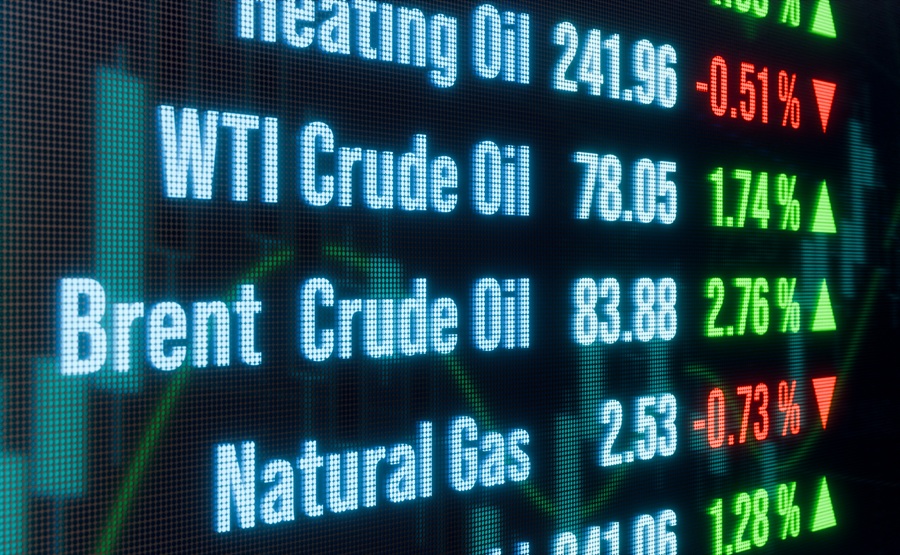
El mercado petrolero tiene la costumbre de parecer asentado justo antes de que deje de estar asentado. Esa es la configuración ahora.
El tráfico a través del Estrecho de Ormuz ha caído bruscamente a medida que el conflicto en torno a Irán se ha intensificado, y más embarcaciones se están oscureciendo al apagar AIS, o Sistema de Identificación Automática, señales que generalmente muestran hacia dónde se mueven los barcos. Ormuz no es solo otra vía de envío. Es uno de los puntos de estrangulamiento energético más importantes del mundo, por lo que cuando la visibilidad comienza a desaparecer, el riesgo de suministro vuelve al centro de la conversación.
Por qué esto es importante ahora
Esto importa por un par de razones.
El movimiento titular es una cosa. La implicación del mercado es otra. El petróleo no solo se trata de cuántos barriles existen, sino que también se trata de si esos barriles pueden moverse, quién está dispuesto a asegurarlos, cuánto tiempo están dispuestos a esperar los compradores y cuánto riesgo extra sienten los comerciantes que necesitan cotizar.
En este momento, tres cosas están chocando a la vez: el transporte marítimo interrumpido, la diplomacia frágil y un mercado que ya se inclina fuertemente en una dirección. Esa combinación puede hacer que Brent se mueva más rápido de lo que normalmente sugerirían los fundamentos por sí solos.
¿Qué es lo que impulsa la mudanza?
1 La visibilidad del suministro se está deteriorando
El primer controlador es simple. El mercado puede ver menos, y eso tiende a ponerlo más nervioso.
El tránsito a través de Ormuz ha caído bruscamente, mientras que una proporción creciente del tráfico ha involucrado a barcos que ya no emiten señales de seguimiento estándar. En un inglés sencillo, menos embarcaciones se mueven normalmente a través de un corredor crítico, y cada vez más de la actividad es cada vez más difícil de rastrear. Eso no significa automáticamente que la oferta esté a punto de colapsar. Pero sí significa que la incertidumbre está aumentando.
2 El búfer de almacenamiento de información de Irán puede ser limitado
El segundo impulsor es la restricción de exportación y almacenamiento de Irán.
La capacidad de almacenamiento en tierra se estima en unos 40 millones de barriles, y el mercado está observando lo que algunos describen como una línea roja de 16 días. Ese es el punto en el que una interrupción prolongada de las exportaciones podría comenzar a obligar a los recortes de producción para evitar daños a los embalses. Para los lectores más nuevos, la comida para llevar es sencilla. Si el petróleo no puede salir de almacenamiento durante el tiempo suficiente, el problema puede dejar de ser el retraso en las exportaciones y comenzar a convertirse en un verdadero problema de suministro.
3 El posicionamiento podría amplificar el movimiento
El tercer impulsor es el posicionamiento, que es solo una abreviación del mercado de cómo los comerciantes ya están configurados antes de que ocurra el siguiente movimiento.
En este caso, el posicionamiento crudo especulativo parece fuertemente unilateral. Eso importa porque cuando un mercado se inclina demasiado en una dirección, no se necesita mucho para desencadenar un ajuste brusco. Un nuevo choque geopolítico podría obligar a los comerciantes a moverse rápidamente, y una vez que comience, el precio puede correr más duro de lo que las noticias subyacentes por sí solas podrían justificar.
Por qué el mercado se preocupa
Un shock petrolero rara vez se queda contenido dentro del mercado energético.
Los precios más altos del crudo pueden comenzar a aparecer en las facturas de fletes, manufactura y energía de los hogares. Eso significa que las expectativas de inflación pueden comenzar a subir nuevamente. Los bancos centrales ya están tratando de manejar un difícil equilibrio entre una inflación pegajosa y un crecimiento más suave, por lo que un mayor petróleo puede dificultar ese trabajo.
Y esto no es solo una historia sobre productores de petróleo recibiendo un ascensor. Las aerolíneas, las compañías de transporte y otras empresas sensibles al combustible pueden verse presionadas rápidamente cuando aumentan los costos de energía. Los mercados bursátiles más amplios también podrían tener que repensar las perspectivas de política si el aumento del petróleo mantiene la inflación más firme de lo esperado.
Los efectos ondulados van mucho más allá del petróleo
También hay un ángulo de moneda, y es menos sencillo de lo que parece a primera vista.
Las monedas vinculadas a las materias primas, como el dólar australiano, a menudo reciben apoyo cuando los precios de las materias primas suben. Pero esa relación no es automática. Si el petróleo está subiendo porque la demanda mundial está mejorando, eso puede ayudar. Si está subiendo porque el riesgo geopolítico se está disparando, los mercados pueden cambiar al modo de desactivación del riesgo, y eso puede pesar sobre el dólar australiano incluso a medida que suben los precios de las materias primas.
Eso es lo que hace que este tipo de movimiento sea más interesante de lo que parece a primera vista. El mismo rally petrolero puede apoyar una parte del mercado mientras ejerce presión sobre otra.
Activos y nombres en el marco
El crudo Brent sigue siendo la lectura más clara sobre el riesgo de oferta amplio. Si los comerciantes quieren la expresión más limpia de la historia del titular, generalmente es aquí donde miran primero.
- ExxonMobil es uno de los nombres más obvios en el encuadre. Los precios más altos del petróleo pueden respaldar los precios de venta logrados y el impulso de las ganancias a corto plazo, aunque nunca es tan simple como subir el petróleo, abastecerse. Los costos, la mezcla de producción y el sentimiento más amplio siguen siendo importantes.
- NextEra Energy agrega otra capa. Esta historia no es sólo sobre combustibles fósiles. Cuando la seguridad energética se convierte en una preocupación mayor, los argumentos a favor de la resiliencia eléctrica doméstica, la inversión en la red y la generación alternativa también pueden fortalecerse.
- AUD/USD es otro mercado que vale la pena observar. Australia está estrechamente ligada a los ciclos de productos básicos, por lo que los precios más fuertes de las materias primas a veces pueden respaldar la moneda. Pero si los mercados están reaccionando más al miedo que al crecimiento, ese viento de cola habitual puede no aguantar.
Para los lectores más nuevos, el punto clave es que los movimientos petroleros no se extienden a través de los mercados en una línea ordenada y predecible. Se ondulan hacia afuera de manera desigual, ayudando a algunos activos, presionando a otros y, a veces, haciendo ambas cosas al mismo tiempo.
Lo que podría salir mal
Una narrativa fuerte no es lo mismo que un comercio unidireccional.
Un alto el fuego podría estabilizar los flujos marítimos más rápido de lo esperado. La OPEP+ podría compensar parte de la estanqueidad elevando la producción. Los datos de demanda de China podrían decepcionar, cambiando el enfoque hacia un consumo débil en lugar de una oferta limitada. Y si la prima geopolítica se desvanece, el petróleo podría retroceder más rápidamente de lo que sugiere el estado de ánimo actual.
Para los lectores más nuevos, la comida para llevar es simple. Los mítines petroleros pueden ser reales sin ser permanentes. Un movimiento puede justificarse a corto plazo por el riesgo de interrupción, y luego revertirlo rápidamente si esos riesgos disminuyen o si la demanda se suaviza.
El mercado ya no está tarifando el petróleo de forma aislada. Es la visibilidad de precios, la seguridad del transporte y el riesgo de que la interrupción del suministro se derrama en inflación, divisas y sentimiento de riesgo más amplio.
Por eso Ormuz importa, incluso para los lectores que nunca comercian un barril de crudo ellos mismos.


Hemos pasado las tres últimas entregas de esta serie mapeando la fontanería de la economía 2026: los bancos que anclan la capital, las utilidades que suministran los electrones, y los fabricantes de chips construyendo el silicio. A medida que la temporada de reportajes de abril avanza hacia su acto final, la atención se desplaza hacia la puerta principal.
Meta, Amazon y Apple se sientan en el punto en el que la creación de IA se encuentra con los consumidores y negocios cotidianos.
Por qué el retorno de la inversión es ahora el foco
Una dura división, a veces llamada la “Gran Dispersión”, se está abriendo entre las empresas que habilitan la IA y las empresas que la monetizan. Meta y Amazon están en el centro de un ciclo masivo de gasto de capital (capex), frente a un gasto estimado en toda la industria de aproximadamente 650 mil millones de dólares a 700 mil millones de dólares en 2026.
Es por eso que las métricas de retorno de la inversión (ROI) están frente a la mente.
- Es Meta ¿La orientación de anuncios impulsada por la IA es lo suficientemente fuerte como para justificar su programa de gastos?
- Es Amazon Web Services (AWS) ¿vuelve a acelerar lo suficientemente rápido como para soportar el empuje de silicio personalizado?
- Can Apple mantener su valoración premium al mostrar que el ciclo del iPhone 17 es real, incluso en un mercado chino más difícil?
En 2026, la pregunta ya no es solo quién puede construir los data centers. Es quien puede convertir esas inversiones en ganancias sustentables y de alto margen. Con los mercados energéticos más tranquilos tras el reciente alto el fuego, las valoraciones tecnológicas han tenido cierto margen para respirar. Ahora el mercado quiere evidencia.


La temporada de ganancias de abril en Estados Unidos está aterrizando en un mercado que quiere algo más que una buena historia. JP Morgan ya ha marcado un listón alto con un fuerte resultado, y ahora la atención se está desplazando hacia la sala de máquinas del S&P 500: infraestructura de IA donde tres empresas están en el centro de esa historia.
Por qué esta ventana de ganancias es importante para la IA
Microsoft, Alphabet y NVIDIA no son solo participantes en el ciclo de IA, están construyendo la arquitectura física y de software de la que dependen otras empresas: los chips, las regiones de la nube, los modelos y las herramientas. Si este gasto va a entregar rendimientos, las primeras señales pueden comenzar a mostrarse en sus resultados trimestrales durante las próximas semanas.
Cada empresa representa una prueba diferente.
- Microsoft: Si la adopción de IA empresarial se está traduciendo en una expansión de ingresos y márgenes
- Alfabeto: Ya sea poseer la pila completa, desde chips hasta la nube y la distribución, es una ventaja duradera o simplemente una posición costosa para defender
- NVIDIA: Si el ciclo de hardware aún se mantiene, acelera o comienza a nivelarse
En 2026, la pregunta ya no es si la inversión en IA está sucediendo, los compromisos de capital son sustanciales y ya se han declarado públicamente. La pregunta es si ese gasto está generando retornos lo suficientemente rápido como para justificar la escala de esas apuestas.